
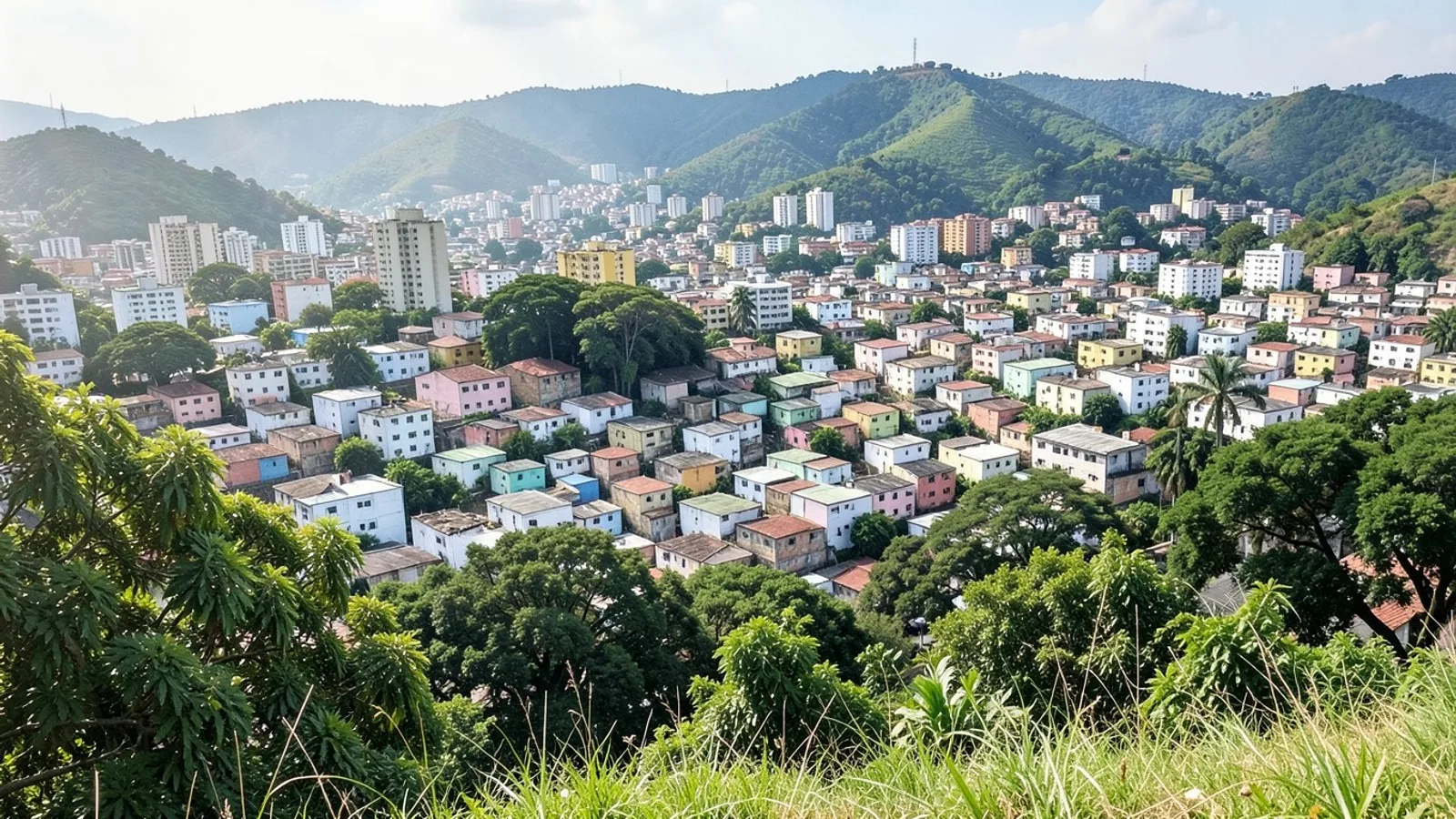
Everyday consumer relations in Varginha, a municipality home to a population of 143,676 residents in the state of Minas Gerais, daily involve retail purchases, contracts for internet and telephone services, vehicle financing, and banking operations. When a durable good exhibits recurring manufacturing defects, when a financial institution imposes unilateral deductions on a checking account, or when a telecommunications service is interrupted without plausible justification, the technical and economic disparity between the individual and large suppliers becomes evident. In these situations of material imbalance, the coordinated action of a consumer lawyer proves indispensable to restoring harmony to legal relations, ensuring full compliance with federal protective standards, and seeking due redress for material and non-material damages. To understand how to organize initial steps and review available legal avenues, you can visit the legal assistance page and learn about the region's structure.
The protection granted by the legal system is not limited to corrective interventions after consolidated financial losses have occurred. The technical support provided by a consumer lawyer plays a highly significant preventive role, assisting in the review of ambiguous terms in adhesion contracts, the examination of payroll-deductible loan proposals, and the verification of compliance with estimates and warranty periods. By understanding the foundational principles of objective good faith, the duty of transparency, and the strict liability of the supply chain, the aggrieved party gains reliable means to challenge unfair practices without exhausting themselves in ineffective administrative channels, establishing solid ground for the protection of their interests.
Vulnerability in consumer relations and specialized technical intervention
The legal system expressly recognizes consumer vulnerability in the marketplace, a premise that underpins a series of legal prerogatives to curb abuses committed by service providers and large-scale merchants. The law establishes that commercial relations must prioritize balance, categorically prohibiting conduct that places the purchaser at a manifestly exaggerated disadvantage. The role played by a consumer lawyer focuses on confronting published advertising and contractual promises with the material reality of the provision received, identifying failures in providing clear information regarding risks, taxes, interest rates, and essential specifications of goods.
One of the most relevant procedural tools in disputes of this nature is facilitating the defense of rights through the shifting of the burden of proof. Because companies hold exclusive control over their computer systems, recorded call logs, and internal logistical routines, the judge can impose on the supplier the duty to demonstrate that it duly fulfilled its obligations or that any failure resulted from facts attributable to third parties. When an aggrieved individual has the support of a qualified professional, the factual narrative is structured with documentary clarity, allowing judicial bodies to ascertain the citizen's technical disadvantage and require suppliers to submit original contracts and complete recordings of prior customer service interactions.
Furthermore, the review of legality encompasses the declaration of absolute nullity of clauses that deprive consumers of the option of reimbursement of amounts paid, stipulate the total forfeiture of paid installments in the event of termination, or transfer liabilities to third parties foreign to the commercial relationship. In situations where undue payments are actually made by the citizen as a result of illegitimate charges, the law guarantees reimbursement corresponding to double the amount paid in excess, except in the case of justifiable mistake demonstrated by the creditor. This rigor protects individual assets and encourages voluntary compliance with commercial commitments.
Routine contractual disputes in purchasing, finance, and telecommunications
The multiplicity of contracts and purchases made daily exposes the population to continuous operational disputes across multiple market segments. When companies' internal support channels operate with automated and dilatory responses, turning to a consumer lawyer becomes the necessary technical path to safeguard the family's financial peace of mind. Among the impasses that most frequently require legal action or formal interventions, the following stand out:
- Improper inclusion in credit protection registries: the inclusion or retention of citizens' names in restrictive registries for nonexistent debts arising from registration fraud, for installments that have been duly paid, or without the mandatory dispatch of prior written notification;
- Unauthorized bank entries and electronic scams: fraudulent contracting of loans with direct payroll deductions, recurring charges for insurance and service package fees on checking accounts without express consent, in addition to illicit transfers occurring in online transactions;
- Quality defects and refusal of technical support: delivery of home appliances, electronic devices, or vehicles exhibiting mechanical or manufacturing defects, without resolving the issue within the statutory deadline set by law, which enables the immediate replacement of the product, reimbursement of the amount paid, or a proportional price reduction;
- Failure to meet deadlines in e-commerce: unreasonable delays in the physical delivery of online purchases, unilateral and unjustified cancellations of already approved orders under the pretext of lack of inventory, and unjustified obstacles to exercising the seven-day right of withdrawal;
- Abusive early termination fees in telecommunications: the imposition of exorbitant termination fines when the subscriber requests the termination of an internet or pay-TV contract due to chronic instability and repeated poor connection quality;
- Refusals to supply and unilateral price adjustments: abrupt cancellations of ongoing contracts, wrongful refusals to supply replacement parts, and sudden changes to price adjustment indexes without transparent contractual provision.
The precise technical delimitation of the supply chain ensures that all legal entities involved in production, warehousing, intermediation, and sales are held jointly and severally liable for any defects identified. In this way, a petition drafted by a consumer lawyer identifies the liable parties with sufficient liquidity to answer in court, conferring greater practical effectiveness to financial restitution and to compensation for any moral damages resulting from the loss of time endured.
Procedural pathways in the Judicial District of Varginha and the role of small claims courts
Determining the appropriate measures to resolve consumer disputes depends on the severity of the loss and the degree of complexity of the required technical evidence. At a preliminary level, citizens can turn to public administration bodies focused on conciliation and enforcement, such as Procon (consumer protection agency), whose institutional remit includes notifying companies to attend conciliation hearings and imposing administrative sanctions and pecuniary fines on offending suppliers. However, when the consensual administrative route does not result in a satisfactory agreement or when urgent preliminary injunctive relief becomes pressing to prevent ongoing harm, the jurisdiction of the Judiciary becomes essential.
At the first-instance level of the State Court, consumer disputes filed by residents of the municipality are processed in the Judicial District of Varginha, whose physical headquarters is located at Avenida Isaltina Moraes Braga, 125 – Residencial Vale das Palmeiras, Varginha - MG, CEP 37031-300. Claims with less evidentiary complexity—such as disputes over improper credit bureau listings with supporting documentation in order, ungrounded billing, or the termination of simple contracts—proceed expeditiously before the Small Claims Court, which is guided by the principles of oral proceedings, procedural simplicity, informality, and speed, seeking swift conciliation between the parties.
On the other hand, when a consumer dispute requires technical engineering expertise, in-depth mechanical examinations, or accounting audits of financial statements and complex interest spreadsheets, the case must proceed before the regular civil courts of the State Court of Minas Gerais. Guidance provided by a consumer lawyer is essential for formulating requests for urgent injunctive relief aimed at the immediate removal of entries from default registries under penalty of a daily fine, or for blocking unauthorized debits from subsistence income. Any appeals against decisions issued in the judicial district are heard by the specialized chambers of the Court of Justice of Minas Gerais (TJMG), located in the state capital, Belo Horizonte, and may reach higher courts such as the Superior Court of Justice (STJ) and the Federal Supreme Court (STF), headquartered in Brasília, the national capital.
Trade flows and contracts between Varginha and neighboring cities
Due to its strategic location in southern Minas Gerais and its foundational role in commerce, logistics warehousing, and the provision of banking and specialized services, Varginha maintains intense daily economic connections with the municipalities that make up its surrounding region. Families and workers living in nearby localities make purchases and acquire products in establishments in Varginha, while local residents hire suppliers and purchase goods delivered by operators based in surrounding cities. This constant regional mobility directly impacts consumer relations and the territorial jurisdiction of judicial proceedings.
A prominent example of this consumer circulation involves the municipality of Elói Mendes, located 15.4 km from Varginha. Residents who purchase durable goods, vehicles, or machinery in the regional hub and encounter hidden defects or failures to honor warranties can invoke federal protective provisions. The Consumer Defense Code grants the option of filing the lawsuit in the forum of the consumer's own domicile, allowing the aggrieved party to bring legal action with the support of a consumer lawyer without having to bear costly travel expenses for court proceedings.
Similarly, there is a strong dynamic of commercial contracting with the municipality of Três Pontas, located 22.2 km from Varginha. The continuous exchange involving the acquisition of supplies, electronics, residential furniture, and the provision of connectivity support raises disputes concerning delivery delays and damage sustained during road transport. Under these circumstances, legal counsel assesses the joint liability of the distributor and the carrier, demanding the immediate delivery of a new product and monetary compensation for any operational disruptions resulting from the unjustified delay.
Another commercial connection of major importance occurs daily with Três Corações, located 24.4 km from Varginha. Transactions involving consortium associations, regional health plans, in-person retail purchases, and the hiring of technical services establish ties that reach beyond the territorial boundaries of a single city. When disputes arise from unilateral policy cancellations or improper denials of medical coverage, the effective intervention of a consumer lawyer enables directing the claim to the competent court with maximum speed to seek judicial relief.
This regional market flow also encompasses other neighboring municipalities within the same territorial circuit, such as Paraguaçu (31.8 km away), Campanha (31.8 km away), Nepomuceno (40.7 km away), São Gonçalo do Sapucaí (41.6 km away), and Lambari (47.9 km away). In any of these instances of interstate or intermunicipal transactions, identifying the liable parties and applying the rules of domicile facilitate the gathering of testimony and the scheduling of hearings in the appropriate judicial district, ensuring convenience and full defense rights for citizens.
Recommended steps for organizing evidence and proving abusive practices
The success in formulating a request before suppliers, administrative bodies, or the Judiciary depends substantially on the soundness of the documentation gathered from the earliest signs of service failure or defective merchandise. Before seeking legal assistance, it is essential that the interested party systematically collect all proof of the dealings that took place. The following list provides a practical and structured guide for compiling the evidentiary elements:
- Preserve the tax invoice and contractual instrument: gather legible electronic invoices, purchase receipts, copies of policies, ongoing service agreements, warranty manuals, and delivery certificates clearly identifying the company and agreed-upon amounts;
- Catalog customer service reference numbers and formal communications: record in chronological order all telephone support reference numbers generated, including call dates, times, and attendant names, also saving full copies of emails, web forms, and messaging app chats with customer support;
- Produce audiovisual records of observed defects: take clear photographs and record dated videos unequivocally demonstrating the equipment's failure to operate, missing parts, mechanical defects, or the poor condition in which the package was unloaded upon delivery;
- Compile receipts for disbursements and financial losses: keep bank statements showing disputed charges, receipts for duplicate payments, invoices for emergency expenses incurred due to the lack of essential merchandise, and price quotes issued by reputable technical repair services;
- Obtain detailed statements of credit restrictions: in cases of improper listing on adverse credit registries, request the official detailed statement issued by credit reporting agencies, showing the listing date, the amount claimed, and the original creditor;
- Draft a chronological factual summary: structure a clear chronological description detailing the time of purchase, the date the defect or abusive charge manifested, the dates of out-of-court resolution attempts, and the company's evasive response or lack thereof.
The advance organization of these evidentiary records enables a consumer lawyer to understand the parameters of applicable civil liability, analyze any statutes of limitations or expiration periods, and substantiate clear requests before the State Court or the Small Claims Court, fostering swift proceedings in the lawsuit.
Professional relationship, ethical duties, and practical access through the platform
The practice of law is strictly subject to the ethical standards established by the Brazilian Bar Association (OAB). Professional practice requires loyal, well-founded technical representation committed to defending the rule of law. It is imperative to emphasize that no practitioner has the ethical authority to promise or guarantee the outcome of a court case, since the assessment of evidence and the granting of claims belong exclusively to the sitting judges of the judiciary. For citizens who demonstrate socioeconomic need and lack the resources to pay legal fees, the Public Defender's Office provides comprehensive, free legal assistance.
In the context of hiring a private consumer lawyer, transparency must prevail starting from the initial consultation. Legal fees must be formally agreed upon and set with this professional in writing prior to the actual commencement of any legal measure or intervention. This service agreement specifies the procedural actions covered, any percentages applied to the economic recovery achieved, and the liability regarding court costs and expenses, ensuring predictability and mutual security for both parties.
With the purpose of dynamically connecting those facing commercial issues with legal professionals practicing in the municipality, our application offers an accessible and confidential alternative. Users describe what happened in their own words, via audio or text, completely free of charge and without the need for prior registration or login. Next, an assistant organizes the details provided into an objective summary of the claim and directs the individual to options for consumer lawyers in their city.
The decision regarding which professional to choose to start a conversation rests solely and exclusively with the individual concerned. Attorneys maintain a published profile detailing their practice areas and respond directly to submitted requests. The dialogue with the practitioner takes place confidentially in a private environment within the application and only proceeds to formal retention when both sides agree to move forward, keeping personal data completely protected until that point. For those seeking initial guidance and wishing to understand the steps involved in local assistance, simply visit the local support platform and check the recommended procedures.
If you are dealing with improper credit reporting, abusive charges on invoices, failure to meet contractual deadlines, or warranty denials in Varginha and nearby areas, report what happened in the application to speak in a secure environment with a consumer lawyer, establish fees in writing prior to commencing any work, and protect your rights with ethical rigor, clarity, and transparency, without any promises regarding outcomes.
Varginha and surroundings
Lawyers who practise in Varginha also take cases from nearby cities.
How it works
- Tell the case
By voice or text, no sign-in. It takes a few minutes.
- The assistant organises it
Facts, dates and documents become a clear summary.
- You choose the lawyer
Professionals who practise in Varginha, in alphabetical order.
Legalocal does not recommend or rank professionals: the list follows alphabetical order.
Frequently asked questions about Varginha
When should I consult a lawyer specializing in consumer rights in Varginha?
You can seek legal guidance upon identifying improper billing, wrongful credit bureau listings, merchandise defects unresolved by technical support, or unfulfilled offers. In the Judicial District of Varginha, civil claims of this nature are heard before the State Court or the Small Claims Court, without any promise of a guaranteed outcome.
Can someone who purchased goods in Paraguaçu take legal action against the supplier in Varginha?
Yes. The Consumer Defense Code guarantees the right to file an action in the court of the consumer's own domicile. If you live in Varginha and faced issues with suppliers established in Paraguaçu, located 31.8 km away, you can initiate the proceeding in the local judicial district, setting legal fees in writing with the chosen professional prior to the work.
How does an attorney handle service disputes originating from Campanha?
If you hired services or bought items from establishments headquartered in Campanha, located 31.8 km from Varginha, and encounter an unjustified refusal of support, you can describe your case in the app via text or voice message. The assistant compiles an objective summary of the claim and connects you with professionals in the field for direct support.
Can residents of Nepomuceno consult a consumer protection attorney through the app?
Yes. People who live or entered into agreements in Nepomuceno, 40.7 km from Varginha, can report what happened free of charge without prior registration. The conversation with the lawyer takes place in a secure environment within the application itself, keeping personal details confidential until mutual agreement, with fees arranged beforehand in writing.